top of page

Rhulk - Boss Design Retrospective

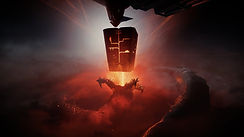
I was the Combatant Designer that led the design of Rhulk for the Vow of the Disciple Raid - collaborating with June Meyer who owned the design of the Raid Encounter and the highly talented inter-disciplinary team of Animators, 3D Artists, VFX Artists, Production and QA that made up the Raid & Dungeons half of the Bosses team on Destiny 2.


It was a highly collaborative environment with many stakeholders both on and off the team including art direction, narrative, audio, and many many contributors.  As the Combatant Designer, I was responsible for designing his combat gameplay, abilities, performances, and determining the key details and priorities that were important for us to accomplish in our execution of those to achieve the goals he needed to in order to succeed.


In practice that meant creating design specs, leading and informing the execution of the team's artists, art leads and higher up stakeholders, executing the implementation in the engine of his behavior and combat gameplay, and constantly evaluating and updating his design during iteration and playtesting in parallel with the Raid team's iteration on the encounter side.

Nearly all of the concept art found here was created by Tobias Kwan and can be found on his art station at https://www.artstation.com/artwork/lR6QXJ

vow-of-the-disciple-rhulk-extra-chest-symbol-locations-destiny-2_feature.jpg
tobias-kwan-tk-subjugator-phase-01-portrait.jpg
Challenge 1 - Making Diamond with Gold

The biggest challenge that immediately stood out to me was that this character, whom I had given the dev-name of "Subjugator" in my design spec (which in a cool twist, years later became the lore/narrative name for the sandbox combatants based off him) was going to be a member of the mysterious "Pyramid Race" that caused The Collapse in Destiny lore.

To me this meant that it was critical to his fantasy and player expectations that that he did not look or move like any combatant race players had fought before, if he moved in combat like a Fallen or Vex or Cabal or any other units, it could massively undermine his impact even if he was otherwise successful.​


In our 'Bosses Taxonomy', a Boss that could not re-use an existing combatant's skeleton/rig/base animations generally required 'Diamond' scope to pull off (Riven from the Last Wish Raid, 'Raid' Oryx from the Kingsfall Raid, 'Story' Oryx from the Taken King Campaign, and Aksis from the Wrath of the Machine Raid are each examples of 'Diamond' Bosses) as the time/iteration/work just to create the base motions/functionality on a new skeleton (idle, fully new/custom locomotion sets, hit/damage responses, look/aim screens) alone could cost almost as much animation time as a full suite of custom attacks - not including death performances, DPS, wipe, intro, etc...


The problem was that on paper with our timeline, we only had time/resources more aligned to a 'Gold' scope boss here, basically 70% of the scope we've historically needed to accomplish a boss that couldn't reuse an existing set of base animations/locomotion/etc.

Because of that, almost every aspect of Rhulk's design at least in some part was influenced by this constraint.  For example, the fantasy of presenting him as being on another level beyond the guardians such that he doesn't feel the need to really exert himself or do many attacks to deliver a huge threat was not only a design decision to meet player expectations around the threat/danger of these 'Pyramid Race' characters - it was also because I felt we could lean into him doing less (therefore less animations), as a feature in support of his fantasy/character design - presenting him as unflinching, a character who sees the player as ants so to speak and a chore he doesn't feel the need to take seriously/exert himself against for most of the fight (until they get under his skin).

Indirectly, this constraint also created the conditions that led to one of his most iconic attacks emerging later in iteration - his kick.

tobias-kwan-tk-subjugator-phase-03-illus.jpg
Challenge 2 - Digitigrade style legs creating locomotion problems

We had solved for the animation scope problem in part by digging up and re-using a combatant prototype from another project that never shipped but had a full, very new/alien looking skeleton, rig, and base motions, so we could start from something that already at least had that going for it even if we ultimately would end up changing nearly all those animations during iteration (Still much quicker to do than try to stand up a blank slate from scratch where much of the team may be blocked until the base animations are further along).  What we ended up with and Art Direction built momentum around was a combatant featuring very long, digitigrade legs (tl;dr - leg/foot morphology that results in a gait/stance that causes the creature to stand/walk on the toes/digits of the feet rather than the soles/flat of the feet (plantigrade) - it can have a lot of implications for stabilization/balance and gait)

This was super cool, and everyone liked it - it was alien-like thus very different than any existing combatant's feel which was important and this seemed fine until we started iterating on the locomotion set to get the character more in-line with that haughty, superiority complex sort of vision I had when we got caught between multiple rocks/hard places.

  1. Because the boss was much bigger than players (and needed to be to feel imposing) it meant that at his run with the way his locomotion was authored, he outran players significantly which didn't make for good combat pacing/tempo (Nezarec would be a later boss where I did lean into that dynamic with the support of an encounter/context that worked with that but here it was a very different arena we wanted that was mostly the fireteam vs Rhulk when they got up to his 2nd phase).  But then we struggled to find a run animation that moved the character slower without creating a very awkward gait given his long legs.

  2. The way the character accelerated and decelerated from walk/run in its combat felt awkward as unlike plantigrade creatures which our locomotion systems worked great for, digitigrade creatures, especially ones with long legs like his skeleton had, we found need very different movement performances at different speeds to be believable in how they are balancing and shifting weight (walking, versus striding, vs running are very different) is much more complex compared to the flat footed way plantigrade characters can walk/move.

  3. Strafing had a similar problem where forwarded movement was very different than side movement and it was awkward to see the character blend between them.


The end result was a character that felt indecisive in it's combat when it kept accelerating/decelerating and changing direction.  While that could be fine for a character who was acting very nimble and taking a fight seriously or had a bouncy gait like we did on say the Cabal Warbeasts, that was problematic here as this character's fantasy/execution really needed to exude confidence to work so he had to commit to what he was doing, and his fantasy didn't have room for constant movement that seemed like it would use a lot of energy...


With this I pitched two solutions to the animation team:

  1. If he is too fast when running, we can't find a slower run locomotion style that feels correct, AND it feels weird to have him accelerating/decelerating all the time - what if I adjusted his design so that he only ever walks?

  2. To solve for the strafing weirdness, what if I also adjusted his combat movement logic such that he almost never will strafe?

The vision/fantasy I pitched was: In his mind, there is a 0% chance he can be killed or lose this fight and is just going thru the motions of stepping on the bugs before him (at least until they get under his skin a bit, which is what DPS/phase 3 is which is a far more aggressive stance/motion).  So for this phase 2 movement, there is no need to take cover or reposition or stand anywhere, he is basically impending doom as he calmly walks directly towards his target performing his attacks with an almost casual indifference.

Around the same time a 'hands behind his back' idea/vison I had for conveying his sense of superiority in this phase was facing some growing skepticism from art leads given it was a departure from our proven animation pillars/model that a combatant should be clearly brandishing a threat (weapon or threatening magic hands at their target).


These ​solutions all came together at the right time and started working out incredibly well and we stayed the course, resulting in his iconic confidence/aura that players heavily resonated with.

tobias-kwan-tk-subjugator-phase-01-front.jpg
tobias-kwan-tk-subjugator-phase-01-portrait.jpg
vow-of-the-disciple-rhulk-extra-chest-symbol-locations-destiny-2_feature.jpg
destiny2-rhulk-kick (1).gif
rhulk-disciple-of-the-witness-rhulk (1).gif
Challenge 3 - Getting Rhulk to actually land like an existential threat
Despite the fact that he is literally designed to lose
(A.K.A How Rhulk's Kick's came to be)
Core to how my design was intending to make Rhulk feel like an indisputable threat, even though players will learn to eventually just strafe/dodge every attack and dunk on him with their fireteam once they've mastered his encounter.  The idea was that we heavily reinforce the fantasy that Rhulk isn't actually applying himself/trying here and that hubris ultimately is his undoing the players exploit to kill him.  If we combine that with hitting a combat experience that has him still be extremely dangerous/lethal despite not even fully applying himself, it will instill the fantasy in players that if he is this dangerous when he wasn't even trying, how would they have stood a chance if he had taken it seriously?  This had a double benefit of justifying the reason players can always beat him without that reducing his threat/making him seem weak, while simultaneously making the player the underdog of this story who's victory is an upset/against the odds...despite the fact that the truth of the scenario is technically the opposite - Guardians are insanely overpowered, godlike, killing machines known for turning the so-called gods they've faced into weapons and armor or other humilations - yet somehow this character, who is also doomed/destined to fail, is meant to feel stronger/like a real threat  against that (This was a constant challenge on Destiny any time we had a boss that narratively was suppose to be that sort of 'existential threat' that is more powerful than the guardians (compared to bosses such as Insurrection Prime or Atraks-1 who certainly needed to be dangerous and present a high stakes threat - but didn't necessarily need to rise to the fantasy of a character that was 'beyond guardians' in their strength to do so.)

Coming from that goal of demonstrating his threat, emerged probably my favorite story to tell about Rhulk, as it came up emergently during iteration and yet ended up becoming one of his most iconic attacks.

Because of the aforementioned scope constraints, I was tightly limited on how many attacks I could squeeze into his initial design.  All bosses bloat during iteration, which if anything makes it even more important to not overload the design before you've even started, and allow iteration to prove the need for things that you debatably may be able to succeed without, while keeping the initial design focused only on what is definitely 'The Most Important Thing(s)'.

As such, he did not have a close range melee in his initial design.  In my original vision/thinking, his dash and beam attacks would be so dangerous/threatening anyway that players basically will be constantly avoiding/running from him to survive (as June and I had aligned very early on we wanted a dynamic DPS where players had to move/fight him rather then stand in a Well of Radiance and shoot/DPS him like bosses often became at the time).  Plus, all the other performances he was needing (intro, death, phase changes, last stand cast, etc) were already stretching our animation estimates so much that I was already having to resort to design decisions that tried to leverage some creative reuse like having his phase 3 attacks be a combo of both phase 2 attacks, just chained together as a 'new' combined attack rather then making a totally new one, and having his phase 1 attack re-use the beams from his phase 2 attacks to save on that VFX scope/etc...

However - during iteration once all of his abilities/combat were fully functional/online, the encounter was fully playable and we were cooking/iterating on how everything all came together - I noticed that while testers were avoiding Rhulk like I expected during his attacks, they often would just run right past him in the cooldown between his abilities.  I anticipated some of that in his original design and thought it might be fine as it could make sense/further his 'not lowering himself' attitude to have him not bother exerting himself in that situation since he was confident he'd get them ultimately, I now saw however that this basically meant players didn't really need to respect his threat between attacks, which undermined his whole fantasy and that needed to change.  Reducing the cooldowns of his attacks and letting him attack more frequently wasn't going to work as we had already experienced versions of him with shorter cooldowns and it was BRUTAL and not in a good/fun way.

I went to animation and talked about the need to add a close range attack for him.  Things thankfully were going well on our animation budget/timeline and we had room to add something, but we didn't have room to go crazy with something super complex or that would create a lot of need for new VFX.  The way Rhulk summoned his glaive for his dash attack we had at this point pretty well defined/developed and were happy with, but that took several seconds to summon, and it'd be weird for him to just...do it faster for some reason here if he didn't feel the sense of urgency to do that during his dash attack - glaive summoning also was work intensive for VFX to do within a performance, plus we had encounter mechanics now tied to him dropping and leaving the glaive behind when he's done summoning it.  So, I went to animation about having him do a melee without the glaive.
 
As an additional challenge, I felt the traditional 1.5s windup we did for most boss aoes was going to be too slow/lumbering and fail to threaten players enough, plus it just didn't fit Rhulk's character, whom we've demonstrated via his dash and other performances is actually incredibly fast, he just doesn't feel the need to use that speed.  I challenged animation to try to come up with a performance where the damage beat of the attack happens in less than 1s (30 frames), ideally closer to 0.75s (20 frames) - a core justification for the shorter time being fair was in my mind that the 'windup' in this case is 'Rhulk getting close enough to melee you' and a player who has gotten close enough to trigger this attack, has basically 'already failed' the skill check and now is not afforded the chance to dodge outside of very skillfully timed play.  In other words, by design, the way you avoid/survive this attack is by not letting Rhulk get close enough to do it - hence reenforcing the experience of fighting him involving having to respect his threat/danger in the encounter.

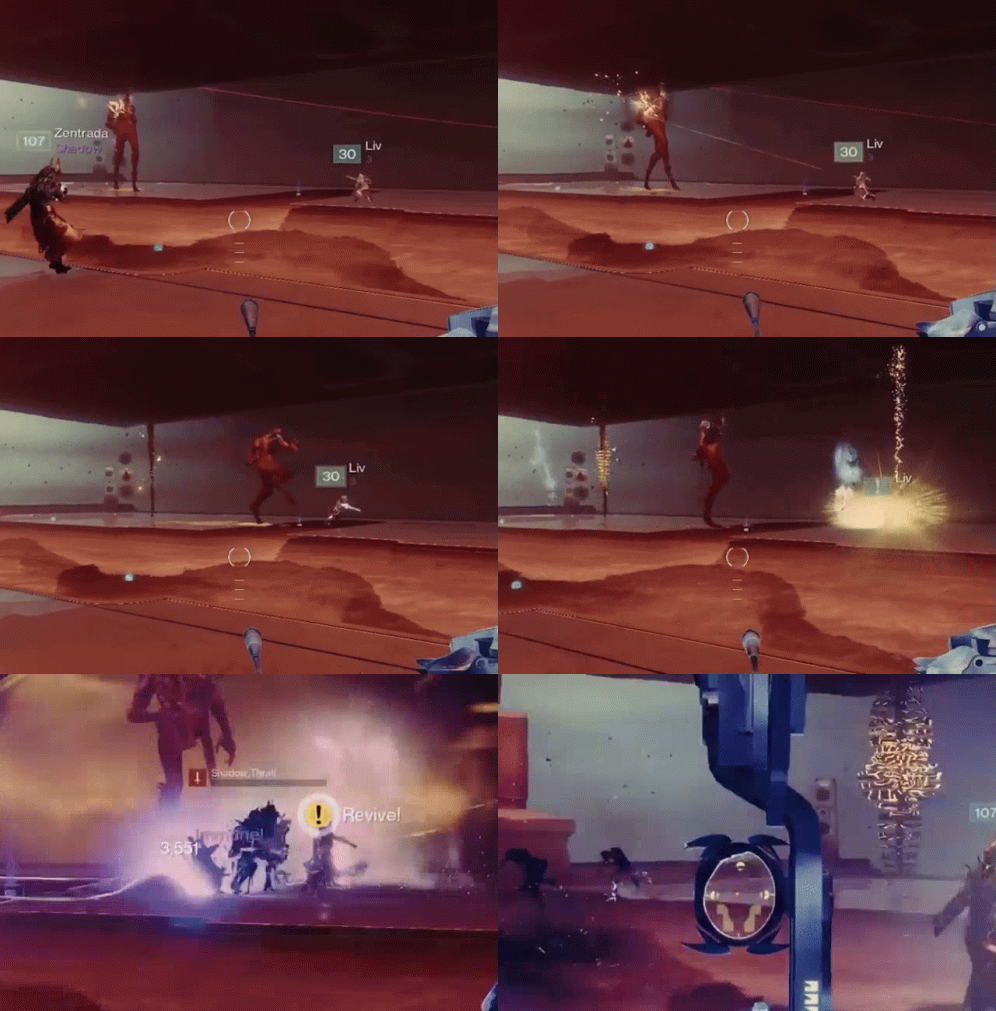
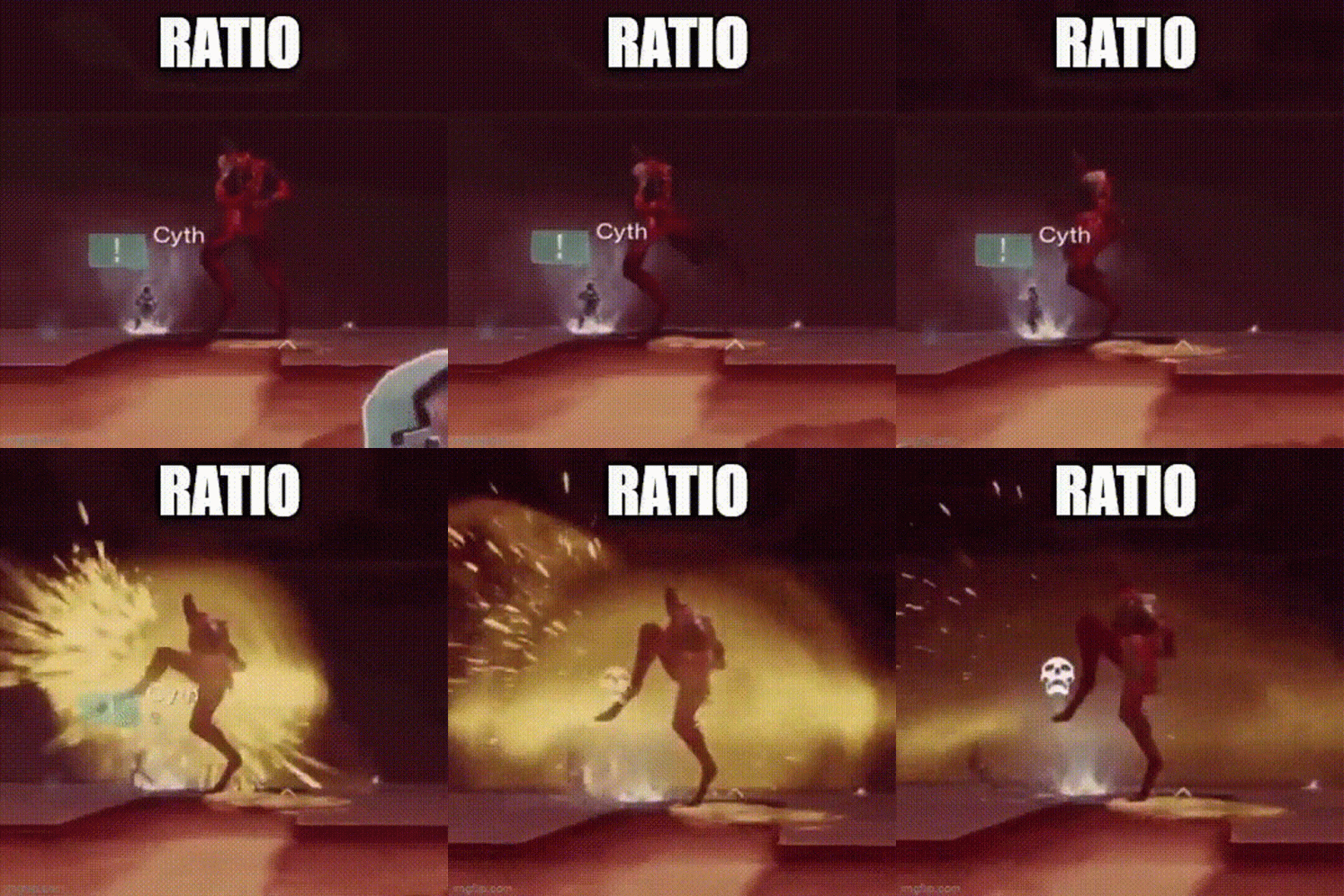
Animation was skeptical but took a crack at it and came up with a kick.  When we reviewed the animation in a playblast (so in a vacuum, out of context of the map or enemies/etc, just a greybox in Maya) I actually was also kind of skeptical at first that it seemed maybe a bit silly, like he was kicking a soccer ball or something, but given we had it in hand, of course had us check it in and playtest it.

The very next day I watched in a playtest as a tester tried to do the very same thing they had gotten away with many times, only for Rhulk to turn and immediately punish that player, kick them, and send their ragdoll sailing off the map before turning to the next victim, resulting in a universally positive reaction/laughter from everyone in the playtest, including the tester who was killed.  At which point I remember turning to the animators in the playtest saying "Never mind what I said earlier -- we're keeping this - players are going to go nuts over this" and sure enough at launch/world's first with tens of thousands watching on Twitch.TV - it became a meme and an immediate iconic ability of the character.

Once the kick was online, his design was very successful in generating the threat we needed and feeling threatening/oppressive when we wanted to.  More than once I actually had to dial back some of his tuning due to that just going too far.  Beyond the example of the cooldowns, we likewise had to move away from a design that at one point had him prioritize players with the dunking buff, as it made him just...overly oppressive/unfair (the nail in the coffin for me was at a playtest seeing him dash at a warlock who was about to dunk and launch them off the arena, preventing their progress -and then the warlock surviving, trying to recover/glide back to the dunk point as like a hero moment to save it (which could've been awesome)...only for Rhulk to basically just walk along the edge of the map waiting for them...and then kill them.  While it was incredibly in character and in furtherance of his superiority goals - the lack of player agency or counterplay to that was just frustrating and bad - we already had shooting his weakspots an encounter mechanic for the buff gameplay and we didn't want to overload that by adding say a taunt mechanic as well to the weakspots (Once again, I saved that for the next boss, Nezarec who I may also do a retro on someday...) - so I had us back off of that design like some other aggressive behavior/tuning directions we explored - he already had what he needed to feel like the powerhouse he needed to be.

A critical aspect of his arena's design that also maintained his threat is the lack of any cover.  I had actually made that a constraint on the world art team to not put anything in his arena that could interfere with his dash.  A lot of that was concern about players finding places to stand or ways to position that Rhulk could not consistently attack - thus creating exploit/cheese strategies.  The display case in his arena that was later added unfortunately caused this very issue at one point - and a later boss (Nezarec) would likewise be massively undermined by this problem.  Nonetheless, Rhulk was highly successful and there were countless other moments/learnings than I have time to go into here - he easily earns the 2nd highest spot in my career for my favorite bosses I got to design from what we accomplished, the challenges we overcame, and the reception we managed to land.
bottom of page